There was a time, until just a few months ago, when the global developer community looked to China as an unsuspected goldmine for open-source Artificial Intelligence. While American giants locked their models behind expensive subscriptions and private APIs, free, downloadable, and incredibly powerful models were arriving from the East.
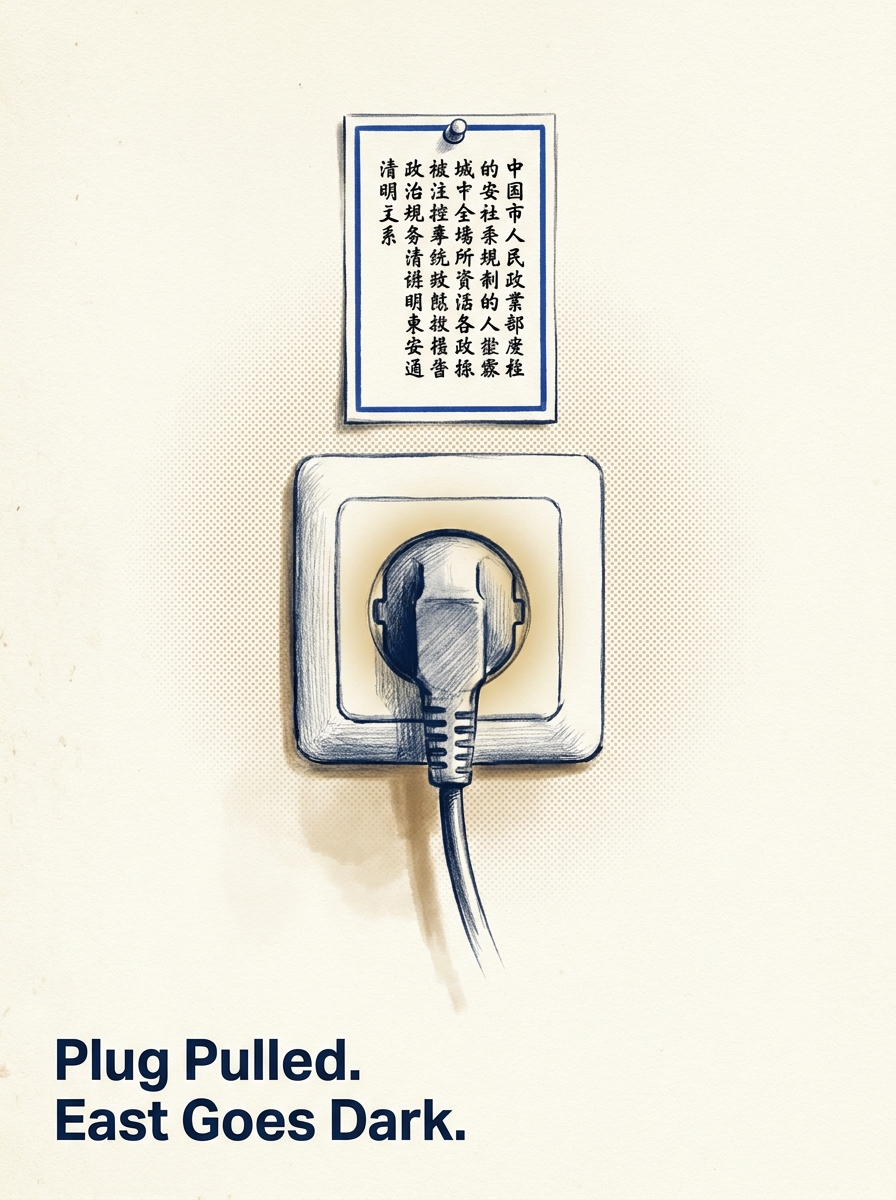
Now, however, the rules of the game are about to change drastically. The Chinese government is considering raising a literal “wall” to block foreign access to its most advanced AI models. And the consequences could be felt heavily, especially here in Europe.
Beijing’s Move: From API Blocks to Criminal Offenses
According to recent rumors, the Chinese Ministry of Commerce and the state planning agency have summoned the heads of local tech giants (including Alibaba, ByteDance, and Zhipu AI). The goal? To discuss a tight lockdown on technological exports.
The measures on the table are drastic:
Stop to foreign access: Blocking the use of Chinese models via APIs for users and companies outside of China.
The End of Open Source: Halting the release of high-performance free models.
The “Crime of Leaking”: The introduction of a criminal offense with very severe penalties for Chinese labs that secretly distribute their models across borders.
Retroactive blocks: The crackdown has already begun. An acquisition agreement (or strong partnership) between Meta and the promising Chinese startup Manus AI has reportedly just been blocked and canceled by Chinese authorities.
Why Now? The Overtaking and the Retaliation
If until yesterday China was chasing Silicon Valley, today it has caught up. The global success of models like DeepSeek or GLM-5.2 has shaken the market: these AIs have proven they can match (and sometimes surpass) the performance of American frontier models like GPT-4 or Claude 3, moreover at a fraction of the computational cost.
Having achieved a real competitive advantage, China wants to protect it. Furthermore, this move is a clear and direct retaliation against the United States, which has long prevented the export to Beijing of the most advanced chips (like those from NVIDIA) needed to train AI.
Europe Caught in the Middle
If the US and China wage war, Europe is the one left licking its wounds. We find ourselves literally crushed in the middle. Despite regulatory efforts (like the AI Act) and some local excellence (like the French Mistral AI), the Old Continent does not possess a “sovereign model” capable of competing on equal terms with the budgets and computing power of the superpowers. Turning off the Chinese open-source taps will cut off vital oxygen to European researchers, startups, and independent developers, who until now could run incredibly powerful models locally at zero cost.
The Developers’ Resistance: “The Hugging Bay” is Born
The community’s reaction was immediate, and the scramble for cover has begun. Fearing that Chinese repositories might be deleted overnight from portals like Hugging Face, “The Hugging Bay” was born. Inspired by the famous piracy site The Pirate Bay, this platform is acting as a lifeboat: a massive archive where developers are saving all currently available Chinese open-source models before the new digital “iron curtain” falls for good.
Is the Future Closed?
We are witnessing a fragmentation of the Internet and technological knowledge. Artificial Intelligence, born as a global and collaborative effort, is becoming the new geopolitical arsenal. And in this new arms race, open source risks being the first major casualty.