

Choosing an M&A adviser in Bologna. An Emilian SME should assess sector and district experience, access to Italian and international buyers, valuation discipline, senior involvement and a clear process from preparation to closing. The right adviser combines local industrial knowledge with a competitive, confidential outreach process.
Updated on
Marco does not exist: he is the archetype of the Emilian entrepreneur. He has spent years building a company of real value, an excellence rooted in its territory, and now stands at a crossroads that will define his future and the company’s. His challenge is the one many face: how to navigate the complex waters of extraordinary finance to guarantee not merely continuity but an exponential growth in the value created.
Facing an M&A transaction, assessing a sale or opening the capital to an investor are decisions that define an entrepreneur’s legacy. Doing it without expert guidance — guidance that understands the specifics of the Emilian market — means risking that the company’s potential is never fully realised. This guide is written for the entrepreneur who, like Marco, is looking for clarity and competence. It sets out the strategic options available to smaller companies in Bologna and Emilia, and the coordinates for choosing the right adviser: a partner able to turn your work into a long-term financial success.
Key Takeaways
- Bologna and Emilia-Romagna are not only the heart of Made in Italy but fertile ground for extraordinary finance transactions that can accelerate the growth of a smaller company.
- Understand the strategic role of an M&A adviser, and why their competence goes beyond that of accountants and lawyers in managing complex operations such as disposals or acquisitions.
- If, like Marco, you are at a strategic crossroads (sale, growth, generational transition), see the fundamental steps for preparing the company for what comes next.
- Company valuation is an art supported by data: learn the principal methods for establishing the real value of your business in the specific context of the local market.
The Entrepreneurial Fabric of Bologna: A Strategic Analysis for Growth
Emilia-Romagna, and the entrepreneurial fabric of Bologna in particular, is an economic ecosystem of rare intensity, where manufacturing tradition fuses with a constant push towards innovation. The region is not only an engine of the national economy but a genuine global hub for Made in Italy excellence, populated by dynamic smaller companies whose growth potential often goes unexpressed. Meeting the challenges of the global market, however, requires a strategic view that sometimes only external, specialist analysis can fully reveal.
To see how a structured advisory approach makes the difference, the following video (in Italian) offers useful insight into the financial advisory process.
The ‘Packaging Valley’: Global Leader and Consolidation Opportunity
The Packaging Valley district is a clear example of Bologna’s excellence, a concentration of know-how that dominates the world market. Today, trends towards sustainability and advanced automation are redefining the sector, accelerating M&A aimed at consolidation and at acquiring innovative technology. For a local company, that scenario is a unique opportunity to position itself for a strategic exit or for integration into a larger group — provided its technological and market assets are properly valued.
From the ‘Motor Valley’ to Biomedical: Diversification and Excellence
Beyond advanced mechanics, the territory has centres of excellence ranging from the Motor Valley to the biomedical cluster of Mirandola. These attract international capital thanks to integrated supply chains and highly specialist competence. Growth and internationalisation for these businesses often pass through partnerships or strategic acquisitions. Navigating those dynamics requires an adviser who knows not only finance but the technological and supply-chain specifics of each sector.
Made in Italy as a Strategic Asset on the Global Market
In any extraordinary finance transaction, the Made in Italy brand is not a simple attribute but an intangible asset of considerable value. It feeds directly into company valuation, since it evokes quality, design and reliability recognised globally. In a negotiation, knowing how to quantify and articulate that value is crucial. Targeted strategies can turn Italian origin into a powerful multiplier — a distinctive competence, and one that has long been at the centre of my work promoting Italian excellence internationally.
Marco’s Challenge: A Bologna Entrepreneur’s Path Towards a Sale
Consider the story of Marco, a fictional name representing a concrete reality: the entrepreneur running a successful smaller company, rooted in the fertile economic fabric of Emilia and a witness to Made in Italy excellence. After decades of dedication, Marco stands at a strategic crossroads that every founder reaches sooner or later. The questions crowding his mind are complex and loaded with implications: is it time to sell and capitalise the value created? Or is it possible to push the company towards a further phase of growth, perhaps through a strategic acquisition? Or would it be preferable to plan a generational transition?
That reflection is not a sign of weakness but of foresight. Analysing the life cycle of your own company clearly is fundamental. Recognising that you have reached a peak of growth, that you face a consolidating market, or that you need substantial capital for the next technological leap — these are critical passages. Choosing to sell is not a retreat but a strategic decision which, planned well in advance, can guarantee continuity and maximise the return for the entrepreneur.
Identifying the Right Moment to Sell
The decision to sell is a convergence of external, internal and personal factors. It is crucial to weigh favourable market indicators, such as high valuation multiples in your sector, alongside internal signals such as a plateau in growth or the need for investment beyond the current shareholders’ capacity. Often the best strategy is not to sell at the peak but to sell while the company still has clear and credible growth potential for a buyer — who will be willing to pay a premium for it.
Preparing the Company for Transition: Internal Due Diligence
An M&A transaction succeeds only if the company is sale-ready. That implies a process of internal due diligence: putting the accounts in order, optimising the corporate structure and proactively mitigating operational and legal risk. Building a solid business plan that sets out future prospects is fundamental. Strengthening the organisation according to international best practice, such as that promoted by the OECD Bologna Process, is an essential step. An autonomous and competent management team, able to guarantee continuity, is among the most valuable assets in a buyer’s eyes.
The Common Mistakes Marco Has to Avoid
The path to a sale is full of pitfalls. The errors an entrepreneur like Marco must absolutely avoid include:
- Emotional management: Attachment to the company can cloud judgement and compromise the negotiation.
- Underestimating the complexity: An M&A transaction is a structured process requiring specific legal, tax and financial competence.
- Going it alone: Not relying on a specialist adviser is the surest way to destroy value and miss the objectives.
- Neglecting communication: Handling communication badly with employees, customers and suppliers generates uncertainty and damages the business during the transition.
The M&A Adviser’s Role in the Emilian Context
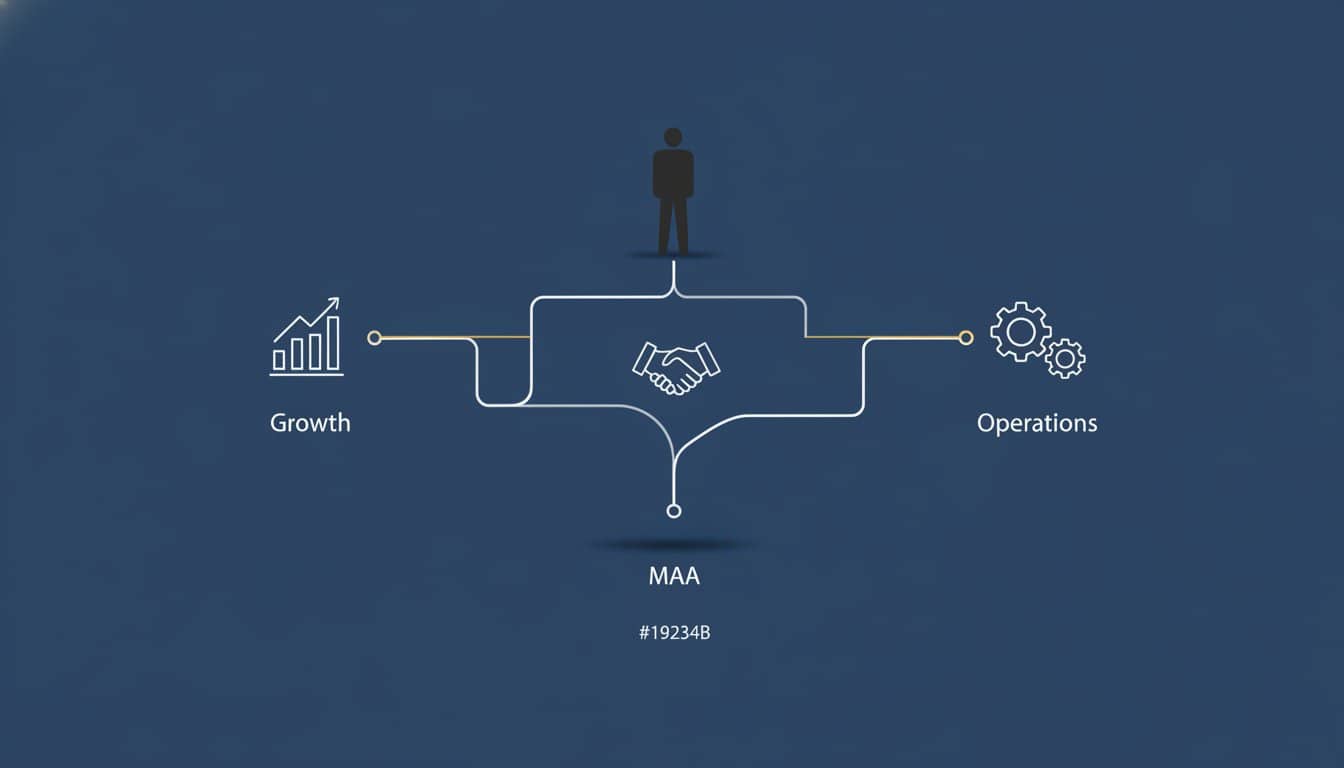
In an extraordinary finance transaction, success is never the fruit of chance but of a meticulous strategy orchestrated by an experienced partner. The M&A adviser is not a simple intermediary: they are the architect of the transaction, working in synergy with the entrepreneur to maximise the company’s value and guarantee its continuity. Unlike the accountant, focused on tax and bookkeeping, or the lawyer, concentrated on legal correctness, the adviser has an overall strategic view. Their task is to guide the whole process, aligning the entrepreneur’s financial, industrial and personal objectives to reach the best possible result.
From Mapping Buyers to Negotiation
A sale process begins with thorough analysis to identify potential buyers, whether industrial partners seeking synergies or investment funds with growth strategies. That phase is crucial: it is not about finding a buyer but the right buyer. The adviser then prepares an Information Memorandum, presenting the company professionally and strategically, and manages due diligence through a virtual data room, guaranteeing a controlled flow of information. The final phase, the negotiation, is where experience proves decisive — not only on price but on complex clauses such as representations and warranties and the price adjustment mechanisms.
Why an Adviser with International Reach Matters for Bologna
For a company rooted in the Emilian industrial fabric, the right buyer is almost never found within regional borders. The local districts compete on global markets, and the industrial partners or funds prepared to pay a premium for that know-how are often German, American or Asian. An adviser with an international network does not merely bring more counterparties to the table: they bring counterparties who understand the value of an integrated supply chain and can read a sector multiple. It is the difference between selling to the first available interlocutor and building genuine competition among those who actually grasp the potential.
Valuing a Company in Bologna: Methods and Local Specifics
Establishing what a business is worth is not an exact science but an art founded on rigorous quantitative analysis and a deep understanding of the competitive context. An accurate valuation is the pillar of any successful M&A transaction, since it defines the perimeter of the negotiation. In Bologna the process takes on specific contours, shaped by a unique industrial fabric and by excellence recognised globally.
Market Multiples (EBITDA Multiples)
This approach, widely used for its immediacy, estimates enterprise value by applying a multiple to EBITDA. The multiple derives from comparable transactions or from listed companies in the same sector. For a Bologna manufacturer with EBITDA of EUR 2 million and a sector multiple of 6x, the indicative enterprise value would be EUR 12 million. The difficulty lies in identifying relevant comparables and in adapting the multiples to the size and risk profile of the specific target.
Discounted Cash Flow (DCF)
The DCF method projects a company’s value from its ability to generate future cash flows, discounting them to today at a rate reflecting the risk of the investment (WACC). This approach is inherently more analytical and requires building a credible business plan. It is particularly suited to businesses with predictable growth trajectories, or to innovative companies where market multiples might not fully capture future potential.
The Made in Italy ‘Premium’ in the Valuation
Quantifying intangible assets is crucial. Belonging to a district of excellence such as Bologna’s Packaging Valley or Motor Valley is not a simple geographical fact but a strategic asset that confers a premium. Patents, quality certifications, distinctive design and established know-how all increase the valuation. Valuing a company like Marco’s, operating in precision components, has to weigh these factors in order to reflect its real value on the international market.
The soundest approach combines several methods to produce a reasoned and objective value range. The objective is not to find a magic number but to build a solid argument to defend in the negotiation. An objective and defensible valuation, based on deep knowledge of the market and its dynamics, is the foundation for maximising value in any extraordinary finance transaction.
Your Entrepreneurial Future in Bologna: Choosing the Adviser
Marco’s path is not just a story but a mirror of the challenges and opportunities awaiting smaller companies in the region. His case is emblematic: complex operations such as a company sale require not only an accurate valuation but a deep strategic view, rooted in knowledge of the Emilian context. Choosing the right adviser is therefore the single most critical factor in navigating these waters successfully.
To turn those crucial decisions into a path of value creation, expert guidance is fundamental. With more than twenty years in extraordinary finance and M&A, a genuine commitment to promoting Made in Italy excellence and an international network of investors and industrial partners, I offer the competence and vision needed to orchestrate successful transactions, protecting the value built over years of work.
The next step for your company’s future begins with a strategic conversation. Book a confidential 30-minute call about your company’s strategy and see how to turn today’s challenges into tomorrow’s opportunities.
Frequently Asked Questions
How much does an M&A adviser cost for a smaller company in Bologna?
The cost is not standardised but typically rests on two components: a retainer covering the initial analysis and preparation, and a success fee calculated as a percentage of the transaction value. The latter, often based on a tiered formula such as the Lehman formula, is the more significant part of the compensation and aligns the adviser’s interest precisely with a successful outcome for the entrepreneur.
When is the best time to sell my company in Emilia-Romagna?
The optimal moment depends not only on market factors but above all on the health and trajectory of the business. Ideally you start the process when the company shows solid growth and consistent profitability, has an autonomous management team and operates in a sector with positive prospects. Selling from a position of strength maximises value and attracts the best strategic buyers or investment funds, guaranteeing a successful transition.
You are based in Rome — do you follow transactions in Bologna and other regions?
Absolutely. Although my operating base is in Rome, M&A advisory work is national and international by vocation. Managing complex transactions, of the kind often found in the dynamic entrepreneurial fabric of Bologna and Emilia-Romagna, rests on network, sector competence and methodology far more than on physical proximity. The ability to operate effectively across Italy is an established strength, at the service of Made in Italy excellence.
How long does a company sale process usually take?
A structured sale process typically takes between nine and fifteen months. That period covers several crucial phases: initial preparation and valuation (one to two months), searching for and approaching potential buyers (two to four months), due diligence (two to three months) and finally the closing negotiation. The actual duration varies with the complexity of the company, market interest and the responsiveness of the parties.
How is confidentiality protected during an M&A transaction?
Protecting confidentiality is a fundamental pillar of any transaction. The process is managed through rigorous instruments: initially an anonymous profile (teaser) of the company is shared. Only after a non-disclosure agreement is signed do potential buyers receive detailed information. Access to sensitive data is then managed through a controlled virtual data room. The adviser acts as the single point of contact, filtering communications to protect the business.
Is it possible to sell only part of the company (a carve-out)?
Certainly. Selling a division — a carve-out — is a common strategic operation. It allows the entrepreneur to dispose of a division that is no longer central, focusing resources on the core, or to realise the value of a specific asset. An operation of that kind, such as the one Marco might face, requires careful preparation to separate the asset legally and operationally, maximising its value for strategic or financial buyers.